Why a physical chip beats a punch card — and an app
The token sits on the counter, gets handed over in a human moment, and carries your brand home. The digital layer does the remembering.
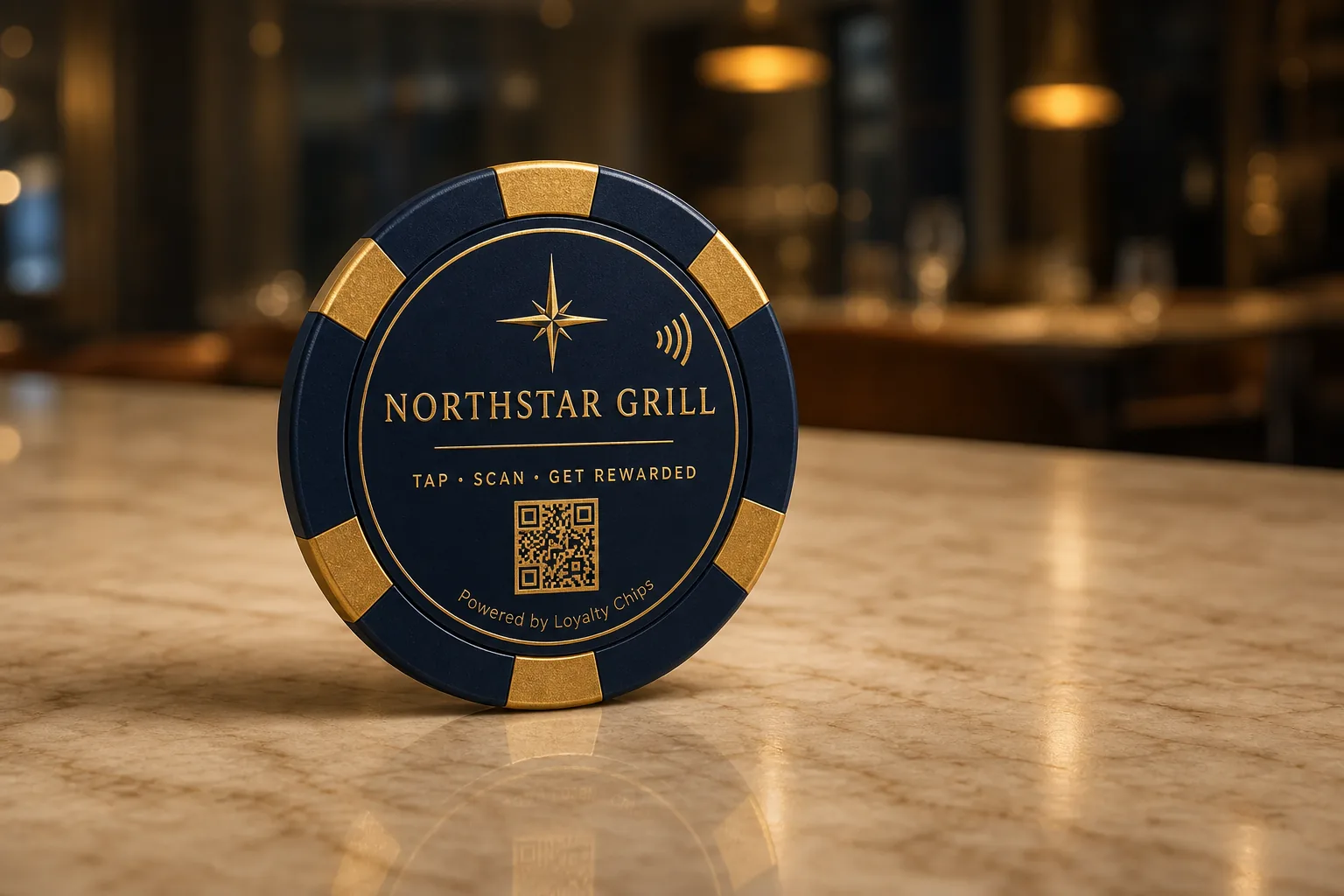
Every loyalty program is a bet on memory. The punch card bets your customer will remember a piece of paper. The app bets they'll remember an icon on the fourth screen of their phone. Both bets lose more often than anyone likes to admit. LoyaltyChips makes a different bet: that a well-made object, handed from one person to another, is the most memorable thing a business can put in a customer's hand.
The counter is the best real estate you own
A punch card lives in a wallet, which is to say it lives nowhere. An app lives in an app drawer next to forty others. A chip lives on the counter — visible in the exact moment a customer decides how they feel about your business. It catches the light. It has weight. People pick it up before they know what it does. That presence isn't decoration; it's the top of the funnel, sitting next to your register.
And the handover matters as much as the object. A chip is given, not downloaded. Your staff hands it across the counter as part of a moment that's already human — “here, this is for your next visit.” No poster begging for an install, no script, no pitch. A small gift, with your name on it.
That brand point is worth pausing on. A punch card carries your logo at business-card quality. An app buries your brand inside someone else's interface. A chip is your brand, rendered in a casino-grade token that customers keep on purpose. It goes home in a pocket and turns up on a desk, a keyring, a kitchen counter — quiet advertising in places a billboard can't reach.
The digital layer does the remembering
The object earns attention; the software keeps the promise. Tap the chip — or scan its QR code — and a branded page opens in the phone's browser. No app, no account, no password. The page shows a reward growing visit by visit, and when it's earned, it bursts with our golden spark. The customer doesn't have to remember anything; the chip and the page remember for them.
This split is the core of the product. Physical for the feeling; digital for the memory. A punch card is physical with no memory — lose the card, lose the progress. An app is memory with no feeling — accurate and invisible. The chip is both halves at once, and each half covers the other's weakness.
An honest mechanic
We also think loyalty tools have picked up bad habits, and we've deliberately left them out. There are no dark patterns in a LoyaltyChips reward page: no pre-checked marketing boxes, no accounts created by ambush, no progress bars that quietly move the goal. Contact capture is consent-first — customers share a name and a way to reach them once, knowingly, and the business they shared it with is the business that keeps it.
The reward itself is whatever the owner promises, stated plainly on the page: visit ten times, get the thing. We think the mechanic works because it's honest, not despite it. The suspense is the product; fine print is the enemy.
Chips never brick
One more promise, because physical objects deserve it: chips never brick. If a business pauses its plan, its chips don't die in customers' pockets — they resolve to a neutral LoyaltyChips page, and the moment the plan resumes, every chip in circulation lights back up with the branded reward. No reprinting, no re-handing-out, no drawer of dead plastic. When you put something real into the world with your name on it, the software behind it should be built to last as long as the object does.
Punch cards had the right instinct — loyalty should be tangible. Apps had the right tooling — loyalty should be remembered. The chip is what happens when you refuse to choose.
LoyaltyChips is a product of Sharka Software, LLC. Press inquiries: press & brand assets →